Technical Diagnostics Advancement: Smart Vehicle Assessment Manual
Regarding vehicle servicing, diagnostic procedures call for precision and expertise to effectively diagnose car malfunctions. Begin by Followup Procedures utilizing electronic diagnostic equipment to retrieve error codes for immediate evaluation. These diagnostic indicators help professionals identify potential issues, while following a methodical Eight-Step Diagnostic Process maintains thoroughness. Verify scan results with manufacturer specifications and meticulously document each step. Initial and final diagnostics are vital for confirming repair accuracy and safety standards. Incorporating Technical Service Bulletins (TSBs) streamlines maintenance work with current OEM information. Through keeping detailed documentation and clear customer communication, professionals become better equipped for implementing thorough problem-solving approaches. Explore techniques to optimize these procedures.
Core Insights
- Modern diagnostics employ OBD-II scanners to detect and evaluate car malfunctions through diagnostic fault codes.
- The 8-Step Diagnostic Methodology provides comprehensive and methodical vehicle troubleshooting and repairs.
- Before and after diagnostic procedures verify system functionality and enhance repair accuracy and documentation.
- Manufacturer bulletins deliver OEM recommendations for addressing particular automotive problems.
- Regular software updates manage safety considerations and upgrade ADAS features.
Exploring Modern Vehicle Diagnostics
In the realm of grasping modern vehicle diagnostics, it's vital to understand the complex combination of modern systems and traditional inspection methods that characterize the process.

You'll discover that the foundation of diagnostics revolves around state-of-the-art tools like OBD-II scanners. These devices interface directly with your vehicle's onboard computer systems, delivering live system analysis, component testing functions, and also module programming functionality. They vary from simple diagnostic tools to professional-grade equipment suited for detailed analysis.
Understanding Diagnostic Trouble Codes (DTCs) is essential. Each DTC reveals specific details about your vehicle's concerns. The first character identifies the affected system, such as the Powertrain or Body. The second digit reveals if the code is generic or manufacturer-specific, while the remaining digits pinpoint the problem and component.
Always consider the power of visual inspection, which enhances electronic diagnostics. Examining for visible issues, fluid conditions, and component wear can confirm electronic findings and highlight additional issues.
This synthesis provides a complete diagnostic approach, enabling you to identify problems precisely and effectively. By unifying these methods and tools, you maximize the full potential of modern vehicle diagnostics to maintain ideal vehicle performance.
Expert Diagnostic Procedures and Recommended Practices
To effectively handle the complexities of vehicle diagnostics, it's essential to implement the Eight-Step Diagnostic Process, conducting thorough pre-scan and post-scan operations.
Incorporate Technical Service Bulletins (TSBs) to retrieve manufacturer-specific solutions, while meticulous documentation and record keeping streamline future reference.
Maintain clear customer communication to define realistic expectations and deliver transparent updates on maintenance developments.
The 8-Step Diagnostic Methodology
Initiating the systematic diagnostic approach ensures a precise and systematic approach to vehicle diagnostics.
First, confirm the problem by interviewing the customer and noting specific symptoms, ambient factors, and whether the issue occurs with a running or static engine. A physical examination follows, where you evaluate systems, prior maintenance, and check oil, coolant, battery, spark, and fuel pump pressure.
Subsequently, connect scanning tools to obtain fault codes, studying data trends for information. Don't overlook service bulletins; they offer crucial details on common problems, safety notices, and technical updates.
Review system data by examining real-time parameters and comparing them with manufacturer specifications, noting any unusual values. This evaluation allows you to pinpoint the problem, focusing on it to a precise area and locating affected components.
Execute repairs, adhering to manufacturer guidelines. It's essential to address the underlying issue, not just the effect, verifying you replace components as necessary.
In conclusion, verify the repair by road testing the vehicle, looking for new issues, resetting codes, and verifying all systems are functional.
Document each phase, from starting conditions to completion, and maintain clear communication with the client throughout the process.

Understanding Scan Procedures: Before and After
Grasping the importance of pre-scan and post-scan procedures in current vehicle repair is crucial for maintaining both safety and repair standards. A pre-scan diagnostic serves as your first line of defense, examining electronic systems to detect present concerns, fault codes, and hidden damage that aren't visible during a visual inspection. This comprehensive assessment enables you to pinpoint safety system problems and interconnected component issues, delivering a guide for efficient repairs.
When the repair work is completed, a post-scan check is essential. It guarantees that all systems are functioning correctly and confirms that no new complications have arisen. This step goes beyond validate the success of the repair; it records system functionality and ensures proper calibration, offering a clear indication of repair completion.
Including these scans into your workflow improves safety verification by confirming that all electronic systems, crucial for modern vehicle operation, are functioning as intended. It also simplifies insurance claims management, offering faster approval and more exact repair estimates.
Technical Service Bulletin (TSB) Integration
For effective automotive maintenance, implementing Technical Service Bulletins (TSBs) within your diagnostic process is an essential step towards accurate and streamlined troubleshooting. TSBs are indispensable tools, providing manufacturer-issued guidance to fix non-safety-related vehicle issues affecting vehicle performance and client satisfaction.
Your approach should start with a comprehensive analysis of relevant TSBs before beginning diagnostic work. This assures you're equipped with factory-provided knowledge about common issues.
Utilizing current diagnostic tools, which smoothly include TSBs, optimizes your troubleshooting process. As soon as you obtain diagnostic trouble codes, these platforms provide immediate access to relevant bulletins, preventing trial-and-error approaches.
Be sure to follow precisely to the manufacturer-recommended repair procedures outlined in the TSBs. This accuracy assures that repairs achieve the highest standards and promote consistent quality.
You'll find that integrating TSBs decreases your diagnostic time considerably, as they offer standardized repair procedures and essential tools and materials. This not merely improves technician productivity but also enhances overall customer satisfaction.
Record Keeping and Documentation
Proper documentation and record-keeping in automotive repair plays a crucial role in upholding professional standards and guaranteeing legal compliance. Initially, you should meticulously record automotive data comprising the vehicle identification number, manufacturer, model, and odometer reading.
Capture vehicle and owner information to build a thorough profile. During service, document each diagnostic procedure carried out, along with test outcomes and diagnostic trouble codes.
Clearly note repairs and replacements made and service procedures completed. It's essential to record the time of key milestones to track the service timeline accurately.
Deploy electronic record-keeping platforms using professional repair tracking systems to streamline record-keeping. Digital inspection forms and digital archiving for diagnostic data boost efficiency and data security.
Consistently keep recovery systems to prevent data loss. For regulatory requirements, retain full service records for no less than 15 months, containing client authorizations and refused services.
Electronic and paper records could be needed, as per regulatory standards.
Best Practices for Client Communication
When handling the intricacies of customer communication in auto repair diagnostics, create a thorough protocol that guarantees clarity and precision.
Begin with the initial interaction: practice active listening and keep eye contact while collecting detailed information about the vehicle's issues. Communicate diagnostics in clear, accessible language to guarantee customers understand the process and stay knowledgeable.
Maintaining records is vital. Develop thorough records of vehicle concerns, differentiate between necessary and recommended repairs, and offer detailed estimates including parts, labor, and timelines.
Get written approval for all repairs and meticulously document customer preferences, including insurance authorizations.
Convert complex technical details into simple language, steering clear of jargon and acronyms. This creates trust and helps customers in making well-considered decisions.
Employ digital tools by providing digital inspections, text updates, and online payments, boosting transparency and convenience.
Maintain customers apprised with periodic status updates, instant notifications of new issues, and clear timelines.
Institute quality assurance through systematic inspections and final checks before delivery.
Following completion, supply detailed documentation of repairs, future maintenance advice, and warranty information.
Obtain feedback through feedback forms and follow-up communications to improve services. Steady communication cultivates satisfaction and loyalty, leading to long-term success.
Advanced Diagnostic Methods and Technologies
Revolutionizing how we handle vehicle maintenance, cutting-edge diagnostic technologies are revolutionizing the field of auto repairs. Welcome the future with artificial intelligence-driven systems that slash diagnostic time by up to 90%. By employing smart maintenance systems, you can forecast potential failures through detailed sensor data analysis.
AI-powered visual recognition systems allow for precise damage assessment, while ML algorithms process extensive vehicle data for precise results. Cloud-enabled diagnostic systems provide centralized data management across entire fleets. This technology supports automatic problem solving and instant anomaly detection, improving vehicle performance and minimizing downtime.
Remote diagnostics empower you to monitor vehicle health without physical inspection, offering instant ECU data access, quick fault detection, and proactive maintenance, all while enhancing customer support through remote assistance. Telematics and continuous monitoring monitor vehicle performance.
These systems continuously track health metrics, enhance maintenance schedules, and assess driver behavior using GPS-enabled tracking. However, obstacles continue, such as handling underdiagnosis with overly aggressive approaches and the intricacy of error accuracy. As you adopt these technologies, you're not just solving problems—you're leading automotive excellence.
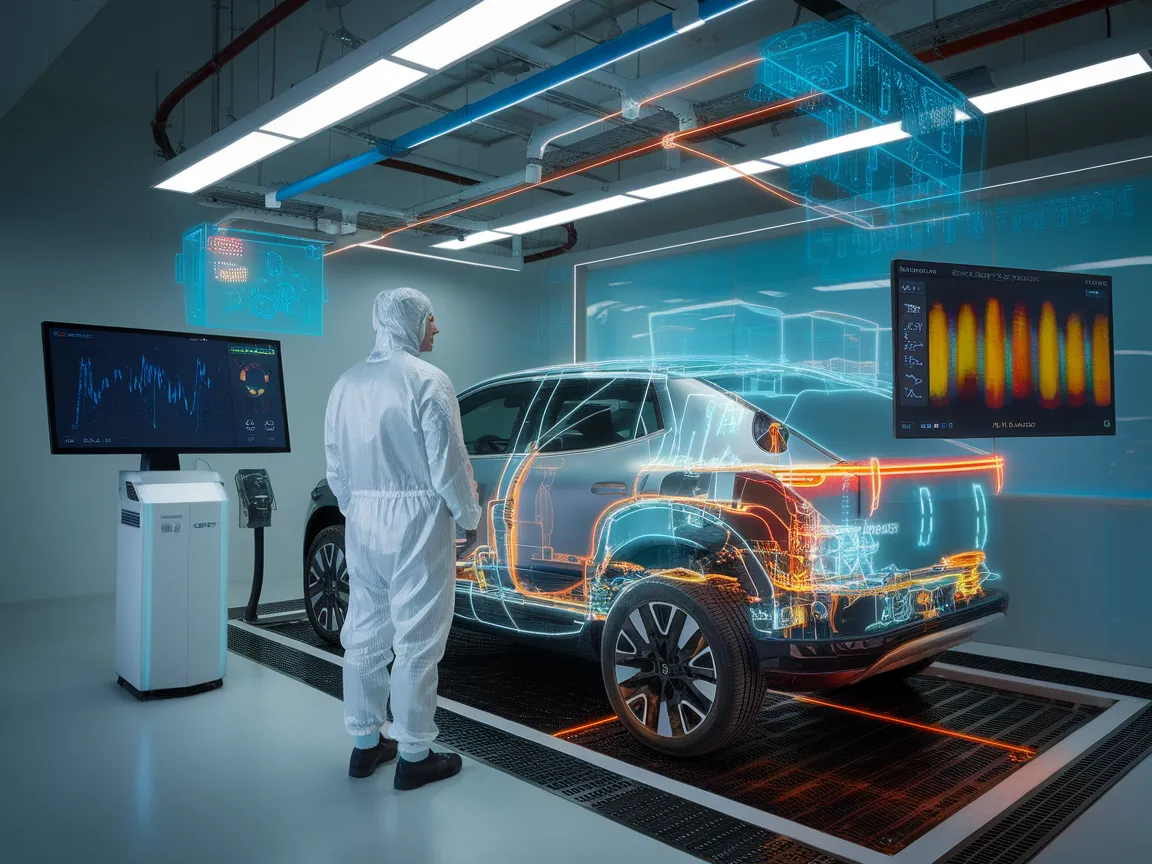
ADAS & Current Vehicle Systems
When servicing vehicles fitted with ADAS, technicians need to perform both static and dynamic calibration for ensuring precise camera and radar system diagnostics.
Keep track of newest software updates and programming to ensure the accuracy of safety systems and comply with warranty requirements.
Thorough documentation of these processes is crucial for warranty compliance and reliable safety system verification.
Dynamic vs Static Calibration Methods
A key component of Advanced Driver Assistance Systems (ADAS) is ensuring precise calibration, which can be accomplished through two main methods.
Static calibration is performed with the vehicle immobile, usually in a specialized workspace like a workshop. This requires a level surface, controlled lighting, and specific calibration equipment. This approach offers high precision, but it demands a designated area and tends to be time-consuming. It's less adaptable and requires substantial facility costs but ensures reliable outcomes, not influenced by weather.
In contrast, dynamic calibration procedures, or mobile calibration, takes place while the vehicle is being driven. This approach requires clear weather, visible road markings, and particular vehicle velocities. You'll benefit from its flexibility, as it tests the system in practical scenarios and demands less specific hardware. However, it relies significantly on weather and road conditions, and the results can vary.
Deciding between these methods is based on vehicle requirements, manufacturer requirements, and your workshop's resources. Often, both calibrations are required to maintain ideal ADAS performance, particularly after services like windscreen changes or wheel alignments.
Each technique demands specialized skills and needs to be executed precisely to preserve system integrity.
Diagnostic Procedures for Camera and Radar Systems
Modern ADAS vehicles require careful diagnostic procedures for vision and radar components for optimal performance.
Initiate diagnostics with checking all sensors for damage or obstruction. Be sure to check for system error codes pointing to operational issues or alignment concerns. Confirm sensor positioning following factory guidelines.
Vision systems are essential for identifying road elements and markings, despite having some restrictions. Poor weather may reduce effectiveness, along with contaminated optics or insufficient lighting may affect performance. Manage these challenges with regular cleaning and maintenance.
Radar technology uses radio waves to determining object position and speed. These systems perform well in adverse conditions, while being subject to environmental interference. Pay special attention to calibration variations.
To ensure accurate assessment, utilize both static and dynamic calibration methods with specialized equipment. Road testing confirms correct functionality on the road.
Make certain to have factory-authorized training and utilize proper diagnostic equipment. Regular maintenance including alignment confirmation and component maintenance is essential for long-term reliability.
Vehicle Software Management and Programming
In today's evolving automotive landscape, maintaining current vehicle software is crucial for peak performance, particularly regarding ADAS systems. Today's vehicles are sophisticated machines containing over 100 million lines of code, making software updates and programming essential for peak operation. Software updates tackle security vulnerabilities, deliver feature enhancements, and improve ADAS functionalities.
You must manage these updates through secure protocols using encryption, maintaining compatibility across electronic control units. Remote updates optimize this process, allowing efficient integration of security patches and feature enhancements without requiring a dealer appointment. Verification and authentication protocols are essential to ensure that updates are valid and compatible with your vehicle's systems.
The software architecture includes core stacks like time-based software for essential functions and event-driven software for user interactions. Understanding integration points, such as middleware elements and hardware abstraction interfaces, is critical for effective system diagnostics.
Real-time monitoring and error code identification improve diagnostic capabilities, while system optimization and calibration control are essential for preserving ADAS efficiency.
Safety Systems Assessment
Contemporary cars rely heavily on software to function efficiently, and maintaining system updates is a single component in the equation. You must focus on verifying the safety systems within ADAS and modern vehicle systems to ensure maximum efficiency.
ADAS combines high-performance computers, sensor networks, and actuators to assist in safe driving. Its essential systems include positioning systems, obstacle detection, and execution systems created to prevent collisions by minimizing human errors.
To assess these systems, initiate requirements-based testing. Establish safety goals, confirm functionality, and make sure everything's documented.
Next, utilize scenario-based testing, modeling dynamic traffic situations and environmental factors to assess system responses.
For hardware, implement Hardware-in-the-Loop (HIL) testing, integrating real components to verify sensors and controllers. Augment this with computerized simulations, modeling real-world conditions for a comprehensive pre-deployment check.
Active safety features like automatic emergency braking and dynamic cruise systems require thorough validation.
Don't overlook passive safety features, such as notification and warning mechanisms, verifying they're dependable and functional.
Warranty Requirements and Record-Keeping
The validity of warranties for ADAS-equipped vehicles depends heavily on proper documentation. It's essential to guarantee that every ADAS system maintenance work is thoroughly recorded. Service documentation need to specify all calibrations, parts replacement, and diagnostic steps. Before and after service diagnostic scans are vital, as they document your vehicle's status during maintenance.
Due to ADAS integration with core vehicle components like engine and brake systems, all repairs require careful consideration of system dependencies. Proper calibration documentation is critical, as basic maintenance can impact ADAS functionality, demanding accurate calibration.
Technical expertise are a vital consideration. Confirm that the maintenance provider maintains records of technician certifications specialized in ADAS technologies. Adhering to OEM specifications and using authorized equipment is crucial for protecting warranty status.
For quality control, log system operation through electronic testing procedures and, when conditions permit, supervised driving evaluations. Document initial issues, assessment outcomes, work permissions, and completion verification.
Preserve both soft and hard copies of every record to serve as official documentation, protecting against potential liability issues and ensuring thorough warranty oversight.
Future Trends in Car Diagnostic Technology
Without a doubt, the future of automotive diagnostics is transforming through advanced technologies that tackle the intricate problems of maintaining modern vehicles. AI-driven fault detection leads the way, offering instant surveillance mechanisms for component health and intelligent monitoring that identify issues before they escalate. These technologies enable automated diagnostic processes, securing maintenance procedures are both efficient and effective.
Cloud-based solutions are revolutionizing remote diagnostics, allowing for unified information control. This allows for comprehensive vehicle tracking and analysis, improving maintenance schedules across multiple vehicles.
Regarding electric vehicles, dedicated diagnostic tools are required. Power system diagnostics, including charging efficiency analysis and thermal management, plays a key role in maintaining EV performance.
Smart vehicle monitoring strengthen real-time vehicle health monitoring through connected systems, offering over-the-air software updates and smooth information transfer.
Machine learning applications, including computerized problem detection and natural language processing, deliver advanced repair guidance, predicting failures with precision.
Advanced solutions like mixed reality systems deliver dynamic maintenance assistance and instant guidance. Modern detection systems improve data collection capabilities, creating a predictive service framework.
These advancements guarantee vehicles stay operational, decreasing service costs and vehicle downtime.
Fundamental Diagnostic Tools
Mastering crucial diagnostic technology is essential for anyone working in modern automotive maintenance. You'll need to become proficient with diagnostic scanners and OBD-II tools, as they're the core of automotive troubleshooting.
Advanced scanners like various top-tier diagnostic tools offer thorough diagnostics and live data analysis. When cost is a consideration, entry-level code readers like the Foxwell NT201 or the Motopower MP69033 still offer basic diagnostic functions.
Enhance your diagnostic capabilities with advanced testing equipment, essential tools for analyzing electronic signals. Choose tools with high bandwidth capabilities, multiple channels, and USB connectivity. Included waveform generators facilitate system diagnostics efficiently.
Consider OEM diagnostic solutions. Programs like AutoEnginuity's ScanTool and PCMSCAN enable multi-manufacturer diagnostics, necessary for modern vehicles. Furthermore, professional calibration tools from industry-leading manufacturers ensure precision in your diagnostics.
Maintain your diagnostic tools periodically. Regular updates expand vehicle coverage, resolve software issues, and improve diagnostic capabilities.
This systematic approach, integrating modern tools and thorough diagnostics, will streamline repairs and ensure proper vehicle maintenance.
Professional Development and Training
Within today's advancing automotive industry, staying ahead demands committing to continuous professional development and training. The field's requirements are evident: to keep pace with advancing vehicle technologies, you must participate in ongoing education and skills enhancement. ASE certification establishes a standard, requiring recertification every five years through rigorous testing and documented experience.
Concentrate on essential components like powertrain maintenance, transmission systems, and sophisticated electrical systems to develop your expertise.
Developing your technical proficiency requires perfecting diagnostic evaluation, diagnostic procedures, and proper handling of modern diagnostic equipment. Brand-specific training programs are essential, offering formal education, online courses, and practical training, all tailored to particular vehicle brands.
Requirements for these programs typically include a high school completion, formal automotive education, and a current copyright.
Utilize online resources such as automotive learning platforms and the ASE E-Learning Portal for adaptable learning options. Obtain technical documentation through platforms like industry-standard databases to maintain knowledge of OEM repair procedures.
Professional credentials are pathways to professional growth, with specialized certifications like Master Technician status showcasing your comprehensive knowledge in automotive diagnostics and repairs.
Quality Management and Validation
The critical role of quality control in auto repair services is paramount, as it ensures that all automobiles exits the service center in peak condition.
Repair confirmation begins with a comprehensive visual inspection to ensure that fixed components align properly and everything is properly fastened. It's necessary to conduct mechanical testing, including functionality checks and road tests, to verify repair effectiveness. Using diagnostic technology is vital for confirming functionality.
Safety verification remains paramount; a thorough safety assessment protocol ensures all systems meet manufacturer requirements.
Accurate record-keeping underlies quality assurance. Digital Vehicle Inspection Reports should feature detailed media of repairs, employ color-coded concern ranking, and contain comprehensive technician notes. Log all parts, methods, and diagnostic outcomes to preserve a detailed service history.
Customer education plays a vital role in satisfaction. Clearly explain repair procedures, using visual aids and providing preventive maintenance tips. Guide customers through documentation, clarify warranty coverage, and answer any concerns.
Guarantee adherence demands adhering to manufacturer guidelines and using approved parts to maintain coverage.
Create follow-up procedures with verification protocols, gather feedback, and maintain detailed records to optimize service quality and consumer happiness.
Essential FAQs Covered
How Can I Discover a Dependable Auto Repair Shop Near Me?
Begin by researching online reviews and ratings. Use websites like Yelp or Google Maps. Confirm certifications such as ASE. Request suggestions from trusted sources. Ensure they offer diagnostic services. Verify service guarantees and warranty coverage for reliability.
Exploring the Costs Associated With Car Diagnostics
For automotive diagnostic services, you'll encounter multiple charges like technician fees, equipment usage, and software fees. Initial diagnostic scans typically cost between $50-$150, but advanced diagnostics could mean additional charges. Make sure to request that your service provider break down all costs, following industry-standard testing protocols.
How Often Should I Perform Diagnostic Testing on My Vehicle?
Experts suggest performing vehicle diagnostics every six months to maintain optimal performance. Monitor diagnostic signals, engine parameters, and system metrics. This maintenance practice identifies emerging issues, facilitating prompt maintenance, lowering the probability of malfunctions, and maximizing vehicular efficiency.
How Can I Conduct Basic Car Diagnostics at Home?
Absolutely, you're able to conduct basic vehicle diagnostics at home. Utilize an OBD2 reader for reading error codes. Check your battery's condition by employing a basic testing device. Examine vehicle fluids with basic tools. These steps can reveal possible concerns without professional tools.
Are Diagnostic Tests Included In Insurance and Warranty Coverage?
You should review your insurance policy and warranty documentation. Warranty coverage could include diagnostic procedures when associated with covered repairs, but insurance generally won't include diagnostics unless part of an covered insurance claim.
Final Thoughts
You've delved into the intricacies of modern vehicle diagnostics, highlighting the importance of expert methodologies and cutting-edge technologies. Having gained insight into ADAS and evolving vehicle systems, you're equipped to tackle future diagnostic challenges. Utilize advanced tools and persist in developing your skills through professional development. Prioritize quality control and verification to guarantee precise outcomes. As the automotive landscape progresses, your focus on mastering diagnostic techniques will empower you to effectively troubleshoot issues and safeguard vehicle integrity.
Related references: https://www.sae.org/standards/ground-vehicle